What is ACoP L8?
ACoP L8 is the Approved Code of Practice issued by the Health and Safety Executive (HSE) for the control of Legionella bacteria in water systems. It provides practical guidance on how organisations can comply with their legal duties under health and safety legislation.
The document applies to anyone responsible for premises where water is stored, used, or circulated, including employers, landlords, facilities managers, and duty holders.
While ACoP L8 itself is not law, it carries significant legal weight. Following its guidance is the most recognised way of demonstrating compliance with the Health and Safety at Work Act 1974 and associated regulations.
Why is ACoP L8 Important?
ACoP L8 exists to reduce the risk of exposure to Legionella bacteria, which can cause Legionnaires’ disease — a potentially serious and sometimes fatal form of pneumonia.
Failing to manage this risk properly can result in:
- Serious health consequences
- Enforcement action by the HSE
- Significant fines or prosecution
- Reputational damage
For organisations responsible for buildings and water systems, compliance is not optional — it is a legal obligation.
Who Does ACoP L8 Apply To?
ACoP L8 applies to a wide range of duty holders, including:
- Employers
- Landlords
- Facilities managers
- Property management companies
- Healthcare and education providers
In simple terms, if you are responsible for a building with a water system, you are likely responsible for managing Legionella risk.
Key Responsibilities Under ACoP L8
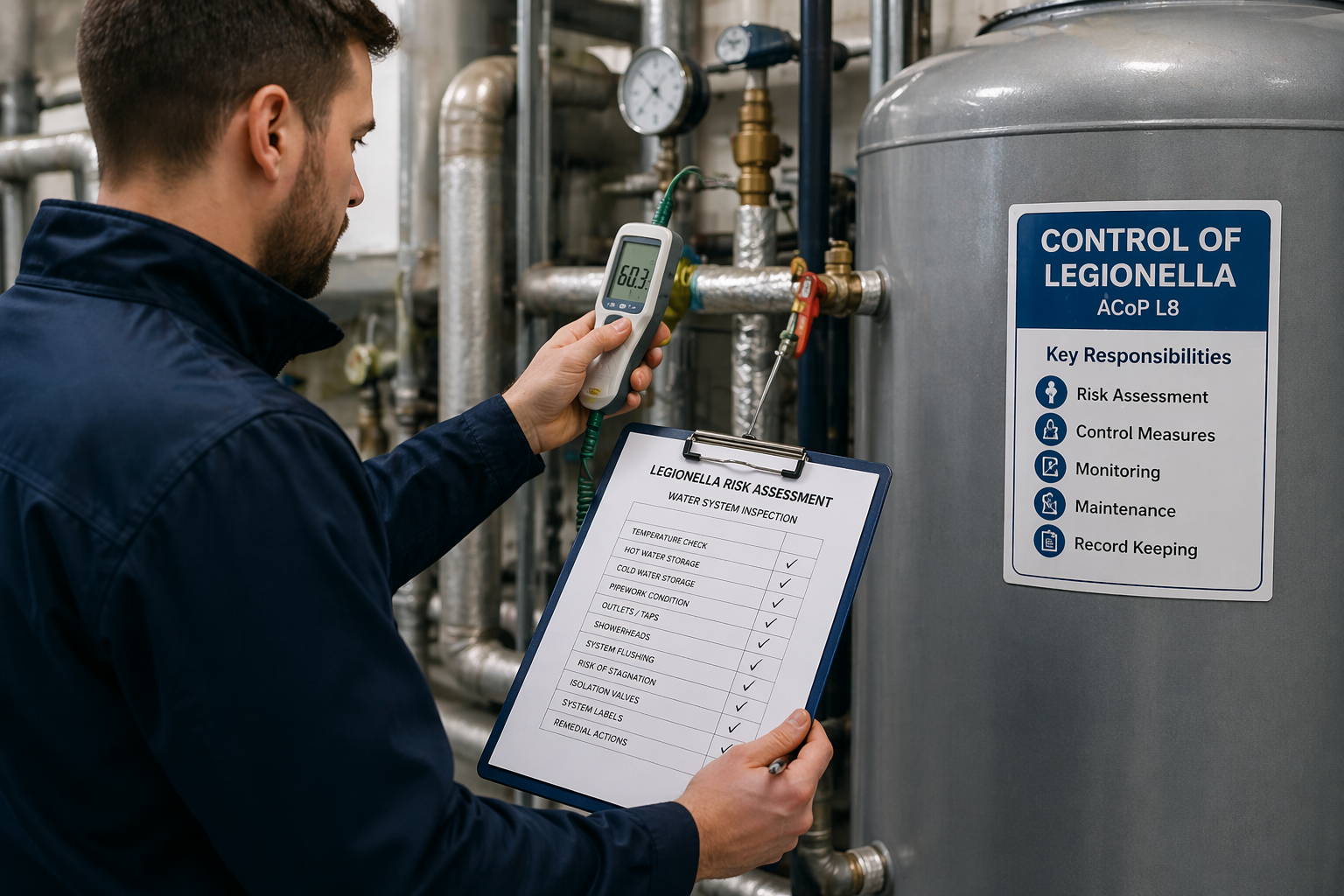
To comply with ACoP L8, duty holders must take a structured approach to managing risk.
This includes:
1. Carrying Out a Legionella Risk Assessment
A suitable and sufficient risk assessment must be conducted to identify potential sources of Legionella growth and exposure.
2. Implementing Control Measures
Appropriate measures must be put in place to control identified risks. This may include temperature control, system design improvements, or maintenance procedures.
3. Monitoring and Maintenance
Water systems must be regularly monitored to ensure control measures remain effective.
4. Keeping Records
Accurate records must be maintained to demonstrate compliance and support audits or inspections.
What is a Legionella Risk Assessment?
A Legionella Risk Assessment is the starting point for compliance. It involves a detailed inspection of your water system to identify risks and determine what actions are required.
The assessment will typically include:
- Inspection of tanks, pipework, and outlets
- Temperature checks
- Identification of stagnant water areas
- Review of system usage
If you have not carried out an assessment, you can arrange a Legionella Risk Assessment to understand your current compliance position.
What Happens if You Don’t Comply?
Failure to comply with ACoP L8 can have serious consequences.
The HSE has the authority to:
- Issue improvement or prohibition notices
- Enforce corrective actions
- Prosecute organisations for breaches
In recent years, there have been multiple high-profile cases where organisations have faced substantial fines due to poor Legionella management.
How Often Should Compliance Be Reviewed?
Compliance is not a one-off activity.
You should:
- Review risk assessments regularly (typically every 2 years)
- Reassess if systems change
- Maintain ongoing monitoring and maintenance
This ensures that risks remain controlled over time.
How to Stay Compliant with ACoP L8
A practical approach to compliance typically includes:
- Conducting a Legionella Risk Assessment
- Implementing a Written Scheme of Control
- Carrying out regular monitoring
- Completing any required remedial works
Many organisations combine these services to ensure full compliance and reduce risk.
Common Misconceptions About ACoP L8
“It only applies to large buildings”
Incorrect. Even small systems can present a risk.
“It’s optional guidance”
While not law itself, it is the recognised standard for compliance.
“A risk assessment is enough”
Ongoing monitoring and control measures are also required.